In the world of cutting tools, the choice between a pneumatic knife and an electric knife is significant. Pneumatic knives are becoming increasingly popular in various industries. According to a recent report by MarketsandMarkets, the pneumatic machinery market is projected to grow by 5.4% annually. This growth reflects an industry-wide acknowledgment of the benefits of pneumatic systems.
Why use a pneumatic knife instead of an electric one? One major advantage lies in performance. Pneumatic knives offer better precision and control, especially when dealing with tough materials. They operate at higher speeds and can efficiently cut through dense items, significantly reducing downtime. The American Society of Mechanical Engineers emphasizes that using air-powered tools can increase productivity by up to 25%.
However, one must consider the initial investment. Pneumatic tools require a compressor and maintenance that might deter some users. Electric knives, while convenient, often lack the durability seen in pneumatic options. Flaws in electric systems can pose risks in critical operations. When choosing, it’s crucial to weigh these factors carefully. The right tool can profoundly impact efficiency and safety in your operations.
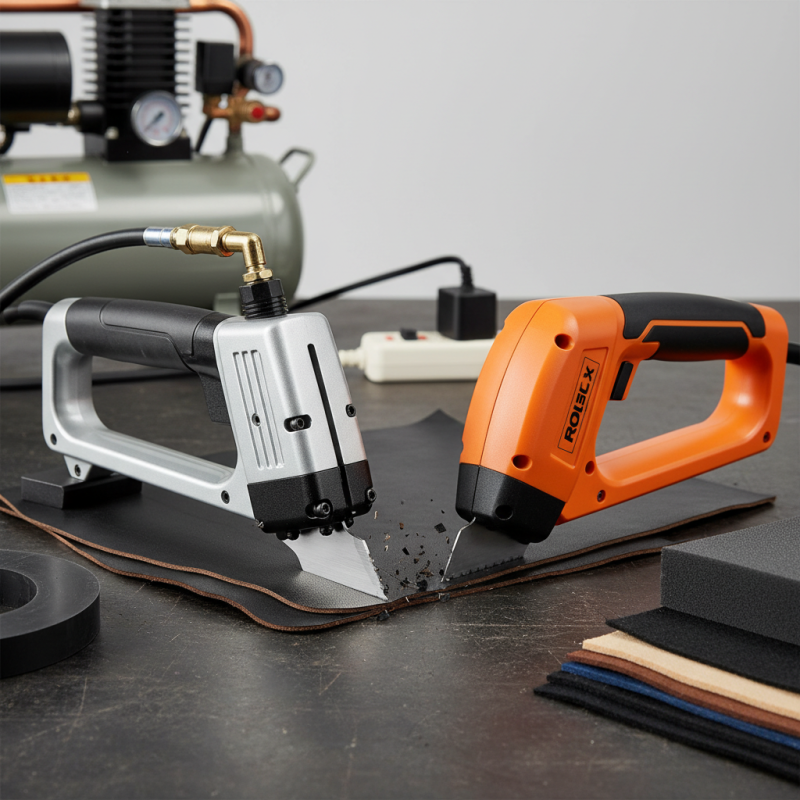
Pneumatic knives have gained popularity in culinary settings due to their unique advantages. The main benefit of these knives is precision. They slice through various materials effortlessly, allowing chefs to create uniform cuts. This can be especially pivotal when preparing fruits and vegetables. The control offered by pneumatic knives enhances overall presentation, a crucial factor in the culinary arts.
Another advantage is speed. Pneumatic knives operate quickly, which can improve efficiency in a busy kitchen. Chefs can work faster, especially during peak hours. The mechanism reduces fatigue, as no heavy lifting is required during operation. However, this speed comes with a caution: proper training is essential. Without it, operators may struggle to harness the knife's full potential, leading to safety concerns.
Durability is another point to consider. Pneumatic knives often require less maintenance than electric alternatives. They are robust and can withstand tough kitchen environments. Nevertheless, they may demand more thorough cleaning processes. This detail is vital, as hygiene cannot be compromised, especially in food preparation. Ultimately, while pneumatic knives are effective, they still require a commitment to care and attention in their use.
When comparing pneumatic knives and electric knives, several factors come into play. Pneumatic knives generally offer greater precision and control in various cutting applications. According to industry reports, pneumatic systems can achieve cutting speeds of up to 10,000 strokes per minute, significantly reducing operator fatigue. This efficiency makes them ideal for continuous use in busy environments.
On the other hand, electric knives are often seen as easier to operate. They require less training and can be more user-friendly for novices. However, they may not provide the same level of cutting power and durability. Research indicates that operators may experience around a 30% decrease in performance when using electric knives compared to pneumatic options.
The choice between the two largely depends on the specific needs of the operation. Pneumatic knives excel in high-demand settings, where speed and precision are critical. Electric knives may suffice for lighter or intermittent tasks. It’s worth noting that maintaining pneumatic equipment can be more complicated, which poses a challenge for some users. Balancing these factors is essential for making an informed decision.
Pneumatic knives offer a unique advantage in operational efficiency and performance compared to electric knives. They provide high-speed cutting with minimal force, reducing operator fatigue. This tool uses compressed air, enabling a consistent blade motion. As a result, it can slice through various materials effortlessly, enhancing productivity in industrial settings.
When using pneumatic knives, consider proper air pressure settings. Too much pressure can lead to erratic blade movement, creating potential safety hazards. Operators should regularly maintain equipment to ensure optimal performance. Lack of upkeep may result in decreased efficiency and increased downtime.
In training sessions, emphasize the importance of technique. Operators should practice controlling the pneumatic knife’s movement while maintaining safety protocols. Even skilled users can experience slipping if they are not attentive. Understanding the limitations of the tool is crucial for achieving the best results.
Pneumatic knives have gained popularity due to their unique safety features. Unlike electric knives, pneumatic models use compressed air for cutting. This design reduces the risk of accidental cuts. The blade retracts quickly when pressure is released, a feature that enhances safety significantly. Users often find this mechanism more reliable than traditional electric knives.
Moreover, pneumatic knives offer better precision. They are less likely to slip during use, providing a tighter grip. Many operators appreciate this aspect, especially in industrial settings. Pneumatic knives usually feature safety locks that prevent accidental activation. This lock can be a game-changer in high-pressure environments.
Despite these advantages, pneumatic knives may require more training. Users must understand how to handle air pressure safely. While they provide excellent safety features, improper use can lead to accidents. It's essential to weigh these considerations against the benefits. Understanding both sides can lead to better decision-making when choosing the right tool for the job.
This chart compares key features of pneumatic knives and electric knives, highlighting the advantages of pneumatic knives in safety and overall performance.
When considering maintenance and durability, pneumatic knives stand out against their electric counterparts. Pneumatic systems use air pressure, which generally leads to fewer moving parts. This reduction in complexity often translates to less frequent repairs. Regular maintenance involves checking air hoses and connections. However, the initial setup can be more complicated. Operators must ensure they have a reliable air supply, which can be an extra step that some might overlook.
Electric knives require consistent electrical maintenance. Wiring issues and motor problems can arise over time. Additionally, they may need replacement parts, increasing long-term costs. Yet, electric knives are versatile and straightforward. While they are often easier to use, their lifespan may be shorter than that of well-maintained pneumatic options. It's crucial to weigh these factors against your operational needs and environment. In heavy-duty settings, pneumatic knives may offer reliability, but they require diligent maintenance to maximize their advantages.
: Pneumatic knives offer greater precision and control for cutting tasks compared to electric knives.
Pneumatic systems can achieve cutting speeds up to 10,000 strokes per minute.
Yes, electric knives are generally seen as more user-friendly and require less training.
Electric knives may provide around a 30% decrease in cutting performance compared to pneumatic options.
They use compressed air, which minimizes accidental cuts, and feature a quick retracting blade.
Yes, improper use can lead to accidents, so proper training is necessary.
Electric knives can be sufficient for lighter or intermittent cutting tasks.
Yes, pneumatic knives typically include safety locks to prevent accidental activation.
Yes, maintaining pneumatic equipment can be more complicated than electric knives.
Consider the specific needs, performance, safety features, and required training for each type.
Pneumatic knives offer several advantages in culinary applications that make them a compelling choice over electric knives. Firstly, they provide increased operational efficiency and performance, as their air-driven mechanism allows for faster, smoother cutting with minimal effort. Safety features inherent in pneumatic knives further enhance their appeal, reducing the risk of accidents often associated with electric devices.
When considering why use a pneumatic knife instead of an electric one, the maintenance and durability of these tools also play a crucial role. Pneumatic knives typically require less maintenance and exhibit a longer lifespan due to fewer electrical components that can fail. Overall, the choice of a pneumatic knife can enhance the cooking experience through superior performance, safety, and longevity compared to their electric counterparts.

Deepit Cutter