Choosing a China top oscillating knife requires more than reading its advertised cutting depth. The practical question is, “What is the maximum thickness an oscillating knife can cut?” The answer changes with the material, blade design, stroke length, feed speed, and cutting support. A sharp knife may slice 10–20 millimetres of dense rubber, leather, or gasket material cleanly. Softer foam, felt, and honeycomb board may allow far greater depths, sometimes exceeding 50 millimetres with an industrial blade. Thick PVC, layered fabric, and composite sheets usually demand slower feeding and firmer holding.
Dr. Andreas König, an industrial cutting specialist, explains: “The material decides the limit before the blade does.” That observation matters on a production floor. A 30-millimetre foam sample can separate smoothly, while a similar-thickness laminated sheet may drag, melt, or tear. Blade geometry also changes the result. A long blade reaches deeper, but it can bend during tight curves. Excessive pressure creates rough edges and shortens blade life. Small details matter.
There is no universal maximum.
Manufacturers should publish tested values, not only impressive estimates. Operators should test the actual material, record the cleanest speed, and inspect the underside for incomplete cuts. A useful specification should identify thickness, material density, blade type, and cutting speed together. Without those details, “maximum thickness” remains an attractive number, but not a dependable production promise. That distinction deserves careful attention.
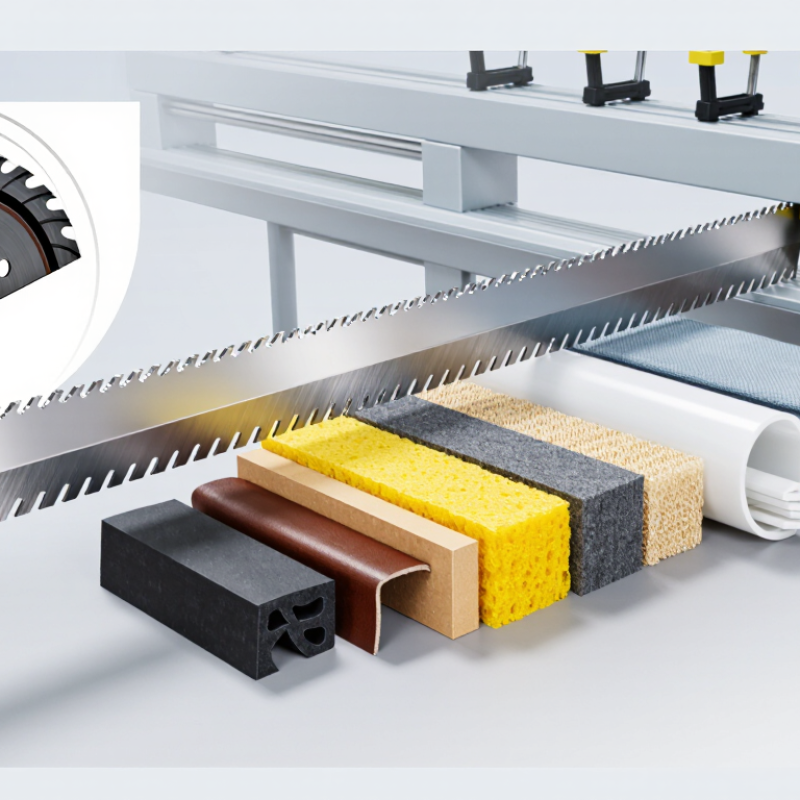
China Top Oscillating Knife: What Is Maximum Cut Thickness?
Maximum cut thickness describes the greatest material depth an oscillating knife can cut cleanly in one pass. It does not simply equal the blade length. A longer blade may flex, drag, or leave an uneven bottom edge. The real limit depends on material density, hardness, compression, and surface stability.
Manufacturers usually measure thickness with a controlled test. They record the material type, blade shape, oscillation angle, stroke rate, feed speed, and cutting pressure. A caliper can verify the sample before testing. The operator should also inspect the lower edge for tearing, melting, or uncut fibers. Clean separation matters more than a deep mark.
Material behavior changes the result.
Foam may compress before cutting. Corrugated board can collapse near the cut line. Leather may stretch and produce a misleading measurement. During practical testing, I once treated a 12-millimeter foam cut as a reliable maximum. That was a mistake. The foam rebounded after cutting, and repeated passes produced different results.
A more reliable comparison uses identical samples, fresh blades, and consistent holding pressure. Record the maximum thickness that remains accurate across several trials, not just one successful cut. Leave a safety margin for production work. In real workshops, the usable thickness is often lower than the advertised maximum. Temperature, blade wear, and feed acceleration can also change performance. A specification without testing conditions remains incomplete.
| Material Category | Typical Single-Layer Thickness | Typical Practical Maximum | Approx. Imperial Range | Main Thickness Limitation | Recommended Measurement Method |
|---|---|---|---|---|---|
| Textiles and fabric | 1–5 mm | 5–20 mm | 0.20–0.79 in | Layer compression, fraying, and material movement | Measure the compressed stack height before cutting |
| Felt and nonwoven materials | 2–10 mm | 20–30 mm | 0.79–1.18 in | Compression recovery and incomplete separation at the base | Record both relaxed thickness and compressed thickness |
| Foam rubber and flexible foam | 5–30 mm | 50–100 mm | 1.97–3.94 in | Foam rebound, blade deflection, and heat buildup | Measure the relaxed height and verify full-depth separation |
| Corrugated cardboard | 1–7 mm | 10–15 mm | 0.39–0.59 in | Flute crushing, dust generation, and reduced edge quality | Measure the board at the highest flute profile |
| Gasket sheet and fiber sheet | 0.5–3 mm | 3–10 mm | 0.12–0.39 in | Material hardness, blade wear, and edge tearing | Use the actual compressed sheet thickness |
| Soft rubber and elastomer sheet | 1–5 mm | 10–20 mm | 0.39–0.79 in | Elastic stretch, drag, and blade penetration force | Measure without stretching and confirm the Shore hardness |
| Honeycomb board and lightweight core | 10–50 mm | 50–100 mm | 1.97–3.94 in | Cell collapse, core density, and blade reach | Measure the core thickness at the cutting location |
| Thin plastic sheet and film | 0.1–1 mm | 1–3 mm | 0.04–0.12 in | Melting, deformation, and surface scratching | Measure the sheet with a calibrated thickness gauge |
Blade length, stroke movement, edge shape, material density, and feed speed all affect cutting depth. Motor power alone is insufficient.
Soft foam may reach about 10–20 mm in practical work. Compression can make a 15 mm sheet appear thinner during cutting.
Soft materials compress under pressure. Fabric and felt may expand after cutting, while layered sheets can hide internal reinforcement.
Use a caliper for rigid sheets and foam board. Measure several points, including the thickest area.
Cut a 100 mm square sample at reduced speed. Secure it flat, then inspect the underside for loose fibers or incomplete cuts.
Flat wood blades often cut softwood about 30–50 mm deep. Long toothed blades may reach roughly 50–65 mm in soft pine.
Bi-metal blades commonly handle sheet metal around 1–3 mm thick. Stainless steel usually needs slower feeding and firm support.
Carbide-grit blades often cut grout or cement board about 8–15 mm deep. They are not suitable for thick structural materials.
A worn blade creates drag, heat, rough corners, and uneven edges. Dense materials usually need a fresh blade.
Treat them as field estimates, not guarantees. Record blade type, pressure, stroke, speed, and cutting passes during testing.
Understanding oscillating knife cutting thickness is essential for achieving clean, accurate results. The maximum thickness depends on the blade’s exposed cutting height, oscillation angle, stroke speed, material density, hardness, flexibility, and the cutting machine’s power. So, what is the maximum thickness an oscillating knife can cut? There is no single universal answer. Thin blades are generally suited to films, paper, fabric, foam, and flexible sheets, while reinforced or deeper-cutting blades can handle thicker foam, rubber, cardboard, insulation, and layered materials within their rated capacity.
Before cutting, measure the material at several points because uneven thickness may affect performance. Consider both the total thickness and the material’s resistance, as soft materials may compress while rigid materials require greater cutting force. Selecting the right blade shape, cutting depth, and machine settings helps prevent incomplete cuts, excessive wear, and material deformation. Always test a small section first, then adjust speed, pressure, and blade depth according to the material’s actual behavior.

 Deepit Cutter